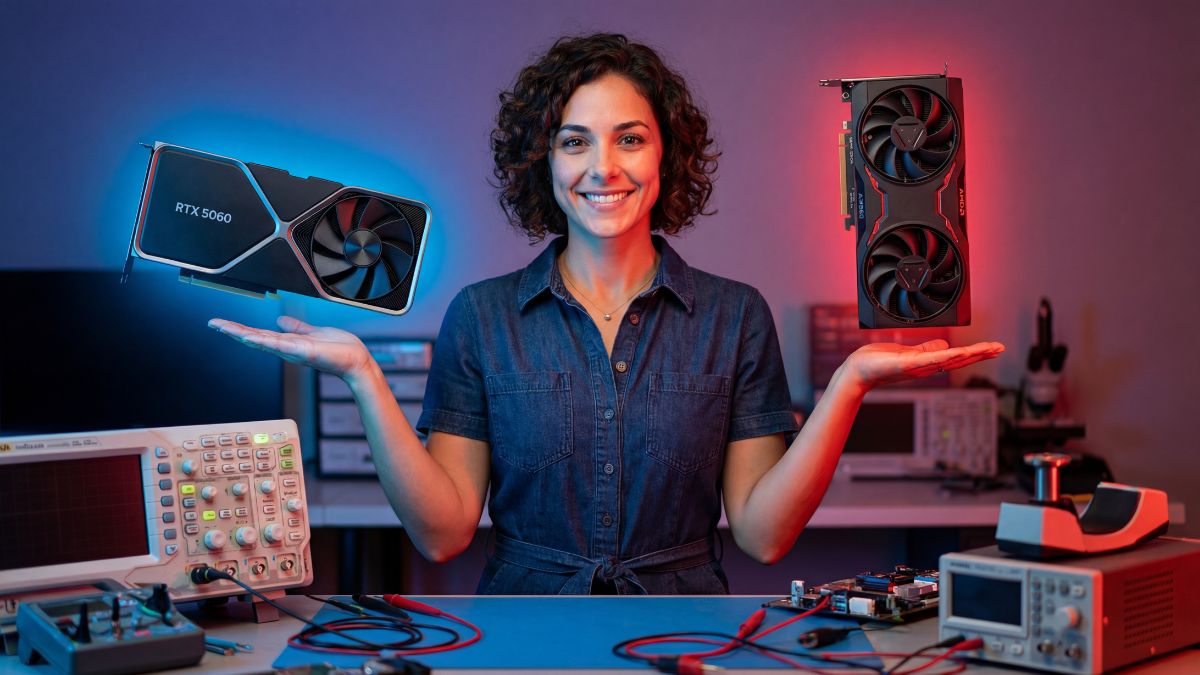
The Tale of the Tape: Specs
Every generation, it’s the same story. NVIDIA gives you incredible efficiency and software magic, but they starve you on the hardware specs. AMD gives you a brute-force muscle car that drinks a bit more gas but has a bigger trunk. The RTX 5060 brings the new Blackwell architecture to the masses, while the RX 9060 refines AMD’s RDNA logic.
But here is the thing that bothers me: the power connectors. NVIDIA is still pushing the 12V-2×6 connector, which requires a dongle for older PSUs. AMD is stuck with the standard 8-pin. As someone who believes in buying used and keeping hardware for a long time, I prefer the connector that doesn’t need an adapter.
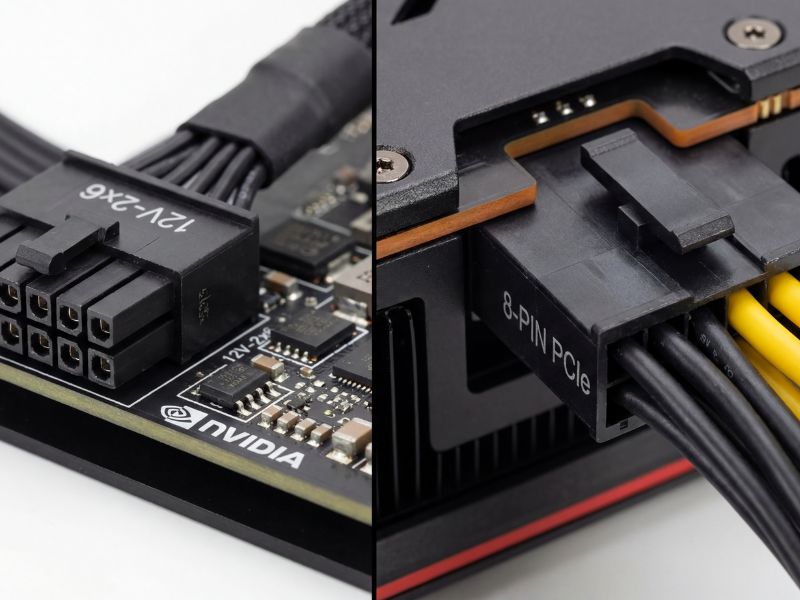
One requires a dongle that scares me; the other uses the reliable cable you already own.
The VRAM Argument (Again)
I’ve written extensively about whether 8GB VRAM is enough, and in 2026, the answer is a hard no. NVIDIA finally bumped the 60-class to 12GB, which is… fine. But it’s the bare minimum for 1440p textures.
AMD, on the other hand, slapped 16GB on the RX 9060. This isn’t just a bigger number on a box; it means you can play GTA VI with High Textures without stuttering. Longevity matters, and VRAM is the primary factor that ages a card.
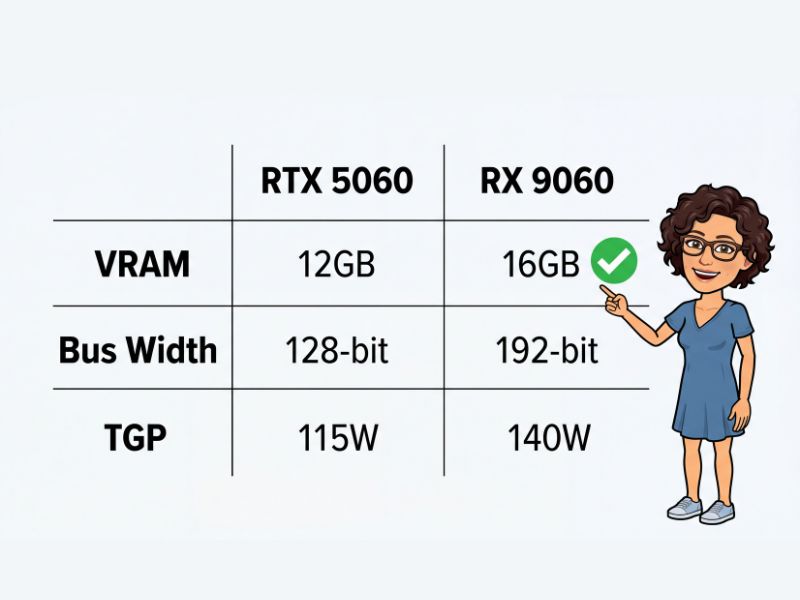
The numbers don’t lie: NVIDIA is still stingy with memory, while AMD is giving you room to breathe.
Features: DLSS vs Raw Silicon
If you are a creative professional who edits video or uses AI tools, the RTX 5060 is the better buy because of CUDA. But strictly for gaming? I prefer raw frames over generated ones. While DLSS 4 is visually impressive, I’d rather have the native horsepower of the RX 9060. If you do go with the AMD card, make sure to check my guide on undervolting (the principles apply to the 9000 series too) to tame its slightly higher power draw.
The Pragmatic Verdict
If I’m spending my own money? I’m buying the **RX 9060**. It fits into my philosophy of “fix it before you buy it”—or in this case, “buy the thing that won’t break your heart in two years.” The extra VRAM and standard power connectors make it the superior long-term investment for the 1080p/1440p gamer.
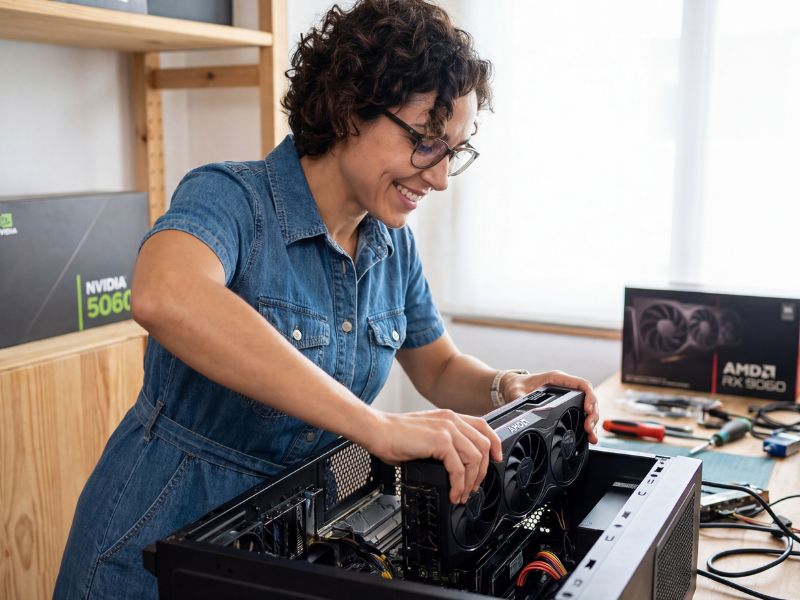
For the budget-conscious gamer who plans to keep their card for 4+ years, there is only one logical choice.
Comparison FAQ
Is the RTX 5060 worth the extra money for DLSS?
It depends. If you play at 1440p where upscaling is essential, DLSS is superior. But for native 1080p gaming, the RX 9060’s raw power often renders upscaling unnecessary.
Does the RX 9060 have better ray tracing than the 5060?
No. NVIDIA still leads in ray tracing efficiency. However, at this mid-range price point, ray tracing performance is often too demanding for either card to handle well without aggressive upscaling.

