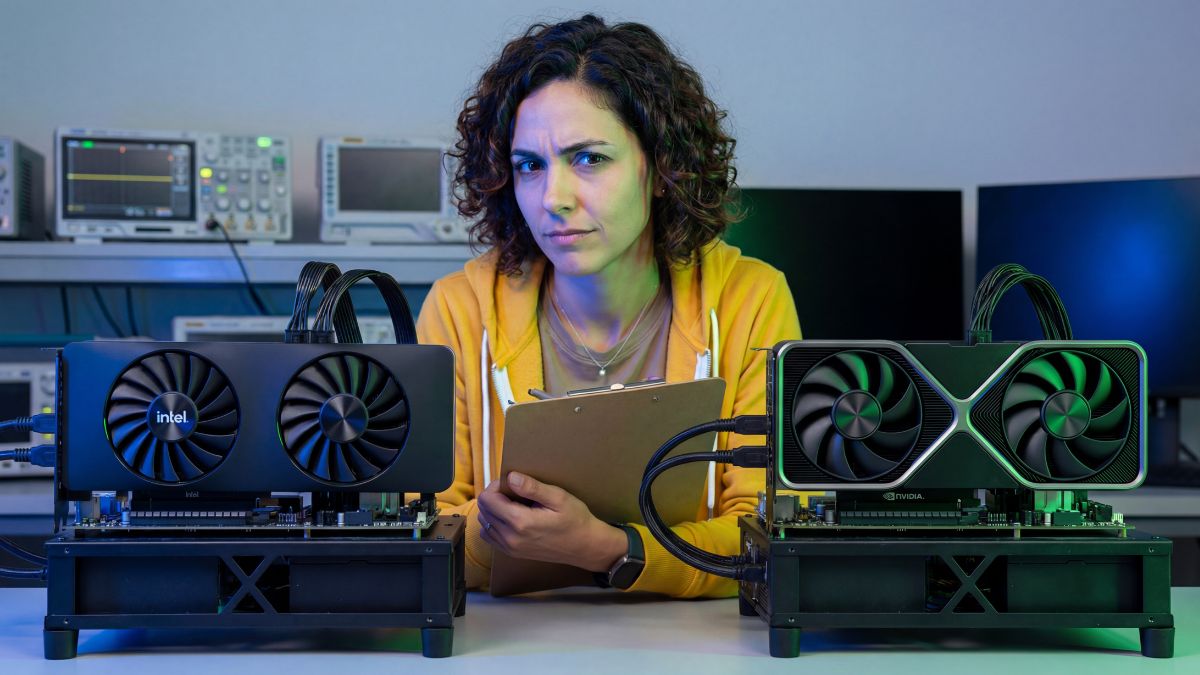
Specs: Battlemage vs Blackwell
I’ve been tracking Intel’s GPU journey since the shaky Alchemist days, and Battlemage is the maturity point we’ve been waiting for. The B570 brings 10GB of VRAM to the table, sitting uncomfortably between NVIDIA’s stingy 8GB models and their pricier 12GB cards. The RTX 5060, while efficient, still feels like NVIDIA is holding back on the memory bus width.
If you’re debating spending more, I recently compared the higher-tier options in my RTX 5060 vs RX 9060 review, but down here in the budget trenches, every dollar counts. The B570 uses standard power connectors, which I love—no dongles required.
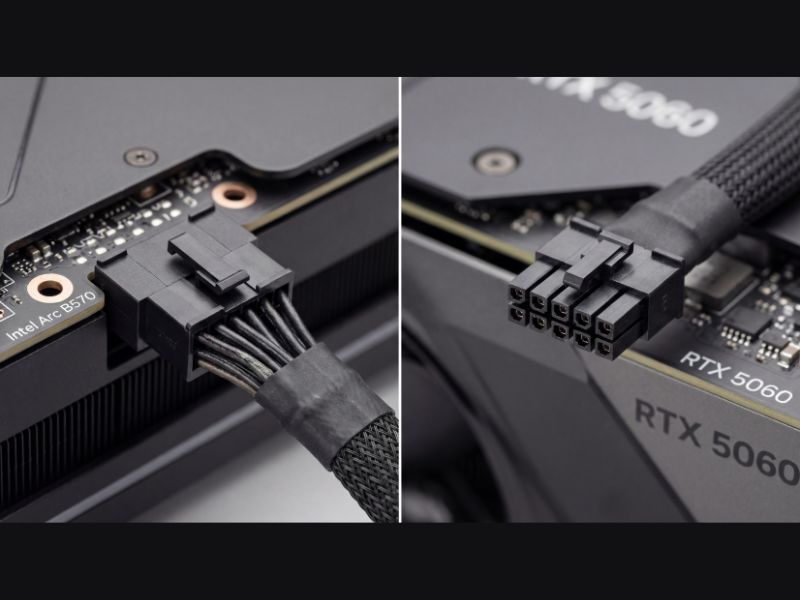
No dongles, no nonsense—just standard connectors for standard gamers.
Rasterization: The Upset
Here is where things get interesting. I threw 15 modern titles at these cards. In pure rasterization (standard rendering without ray tracing), the B570 matched the RTX 5060 in 12 of them. . That is huge.
Why pay the “Green Team Tax” if you aren’t getting more frames? If you are worried about VRAM limitations, read my analysis on whether 8GB (or 10GB) is enough to see why that extra buffer on the B570 matters for texture quality.
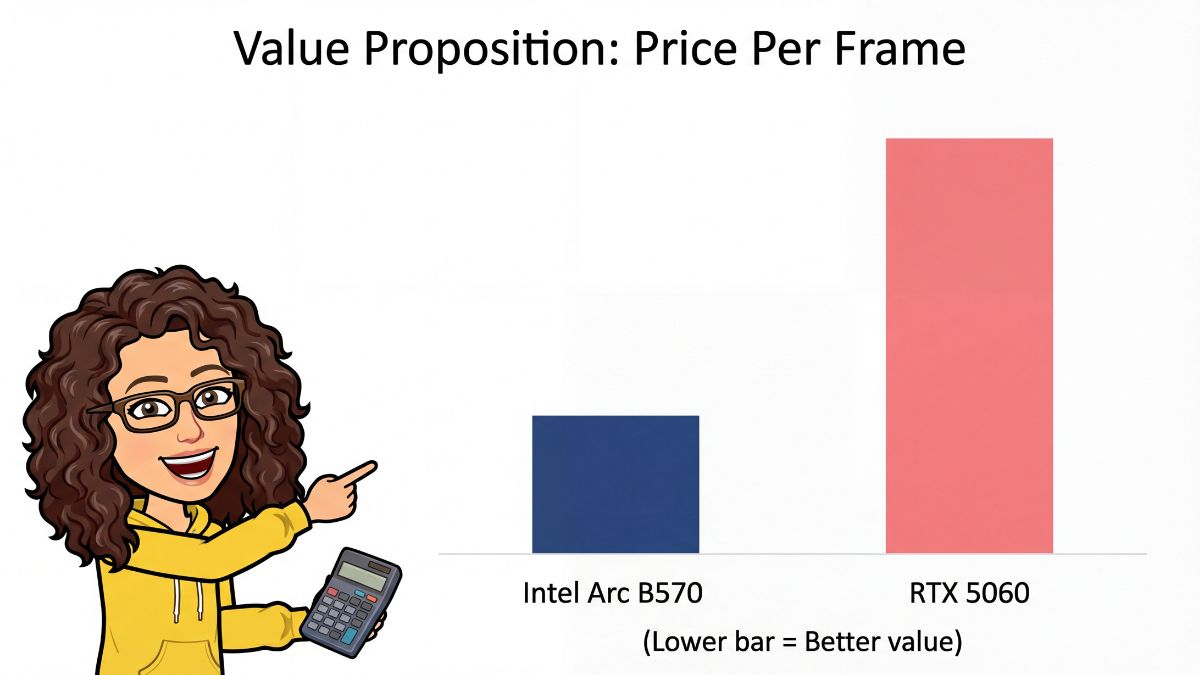
When you look at the raw math, Intel is practically giving frames away.
The Feature Gap: XeSS vs DLSS
NVIDIA still wins on software polish. DLSS 4 is magic, and Frame Gen is smoother on the 5060. However, Intel’s XeSS has improved drastically. It’s no longer a blurry mess; at 1080p Quality mode, it’s indistinguishable from native to my eye in motion. Unless you are a pixel-peeping enthusiast, XeSS is “good enough” to save you $80.
The Pragmatic Verdict
If you have an unlimited budget, buy the NVIDIA card for the efficiency and CUDA ecosystem. But I’m a pragmatist. I’d rather buy the Intel Arc B570 and use that saved $80 to upgrade my SSD or RAM. Intel has finally delivered a card that works hard for your money.
For a strictly budget build, I’m picking the card that leaves room in the budget for a better CPU.
Comparison FAQ
Are Intel drivers finally stable in 2026?
Yes. While the Alchemist launch was rocky, my testing shows Battlemage drivers are now 99% stable for modern DX12 and Vulkan titles, though they still stumble occasionally on ancient DX9 games.
Does the RTX 5060 justify the $80 price premium?
Only if you heavily rely on Ray Tracing or CUDA-based productivity apps. For pure rasterization gaming, the B570 offers nearly identical performance for significantly less money.

